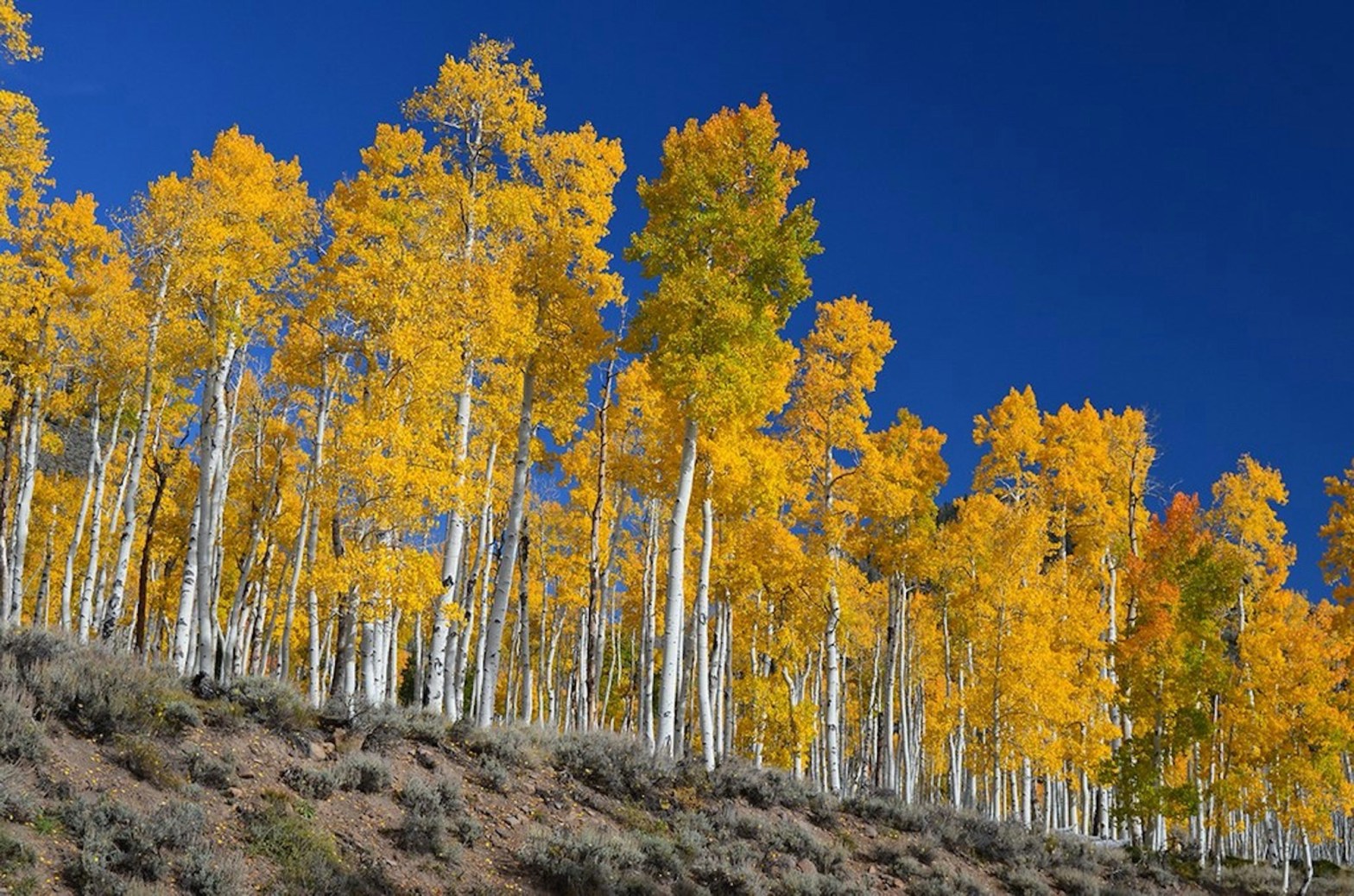
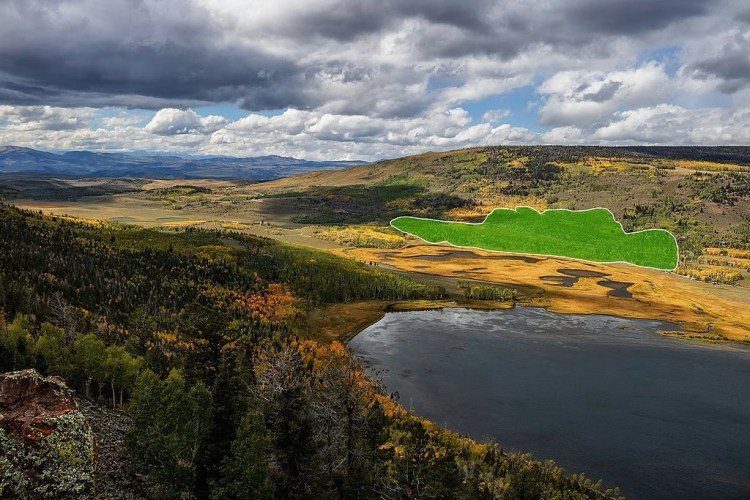
Contributed by Ayla Sparks, Community Coordinator ATFS – Hidden in the Fishlake National Forest of Utah stands one of the most astonishing living organisms on Earth: Pando, a massive grove of quaking aspens (Populus tremuloides) that is, in fact, a single living being. Stretching across 106 acres and weighing an estimated 6,000 tons, Pando is considered one of the heaviest—and possibly oldest—organisms on the planet. Its name means “I spread” in Latin, a fitting title for a being connected by one vast underground root system.
Though it appears to be a forest of individual trees, every trunk you see is actually a genetically identical stem sprouting from the same ancient rootstock. A single organism, shimmering with thousands of fluttering leaves.
A Bit of History
Scientists began studying Pando in the 20th century, intrigued by the uniform genetic makeup across such a large area. Genetic testing confirmed the extraordinary truth: what appeared to be roughly 47,000 individual trees were all part of a single clonal colony, connected by one vast underground root system. While individual aspen stems typically live only 100–130 years, the root system that produces them may be thousands—and possibly tens of thousands—of years old.
Determining Pando’s exact age is difficult because the organism constantly renews itself. As older trunks die back, new shoots emerge from the same root network, leaving no original stem to date. Unlike a single tree that can be aged by counting growth rings, Pando’s true longevity exists underground, hidden and continuous. Some scientists estimate the colony began spreading shortly after glaciers retreated from the region at the end of the last Ice Age, making it potentially one of the oldest living organisms on Earth.
Quaking aspens regenerate by sending up new shoots when older stems die back, allowing Pando to expand, recede, and regrow repeatedly over millennia. Through this process, it has survived fires, droughts, and dramatic climate shifts—not as a static relic, but as a living system constantly rebuilding itself.
Ecological Marvel
- Pando is considered one of the world’s largest organisms by mass.
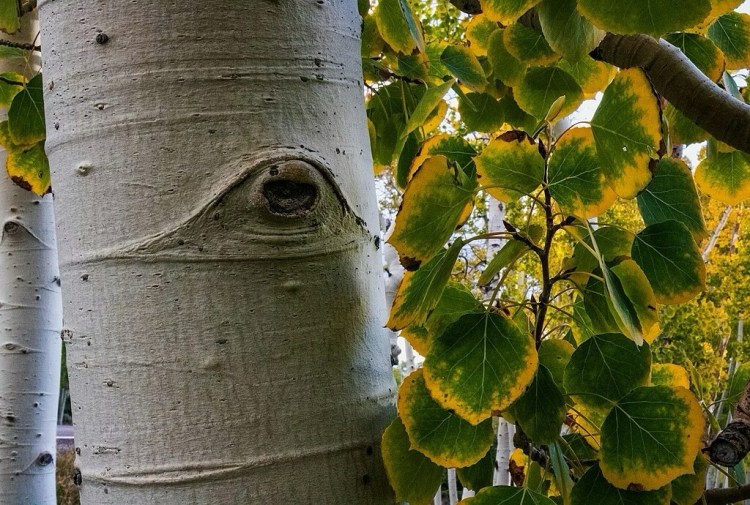
- Its shimmering leaves “quake” at the slightest breeze due to flattened leaf stems.
- The colony regenerates itself through root sprouts rather than seeds, creating genetically identical stems.
- Aspen groves like Pando support rich biodiversity, offering habitat for birds, insects, mammals, and understory plants.
- Despite its resilience through deep time, Pando is now struggling to regenerate due to human impacts, grazing pressure, and fire suppression.
The Forest That Stopped Growing
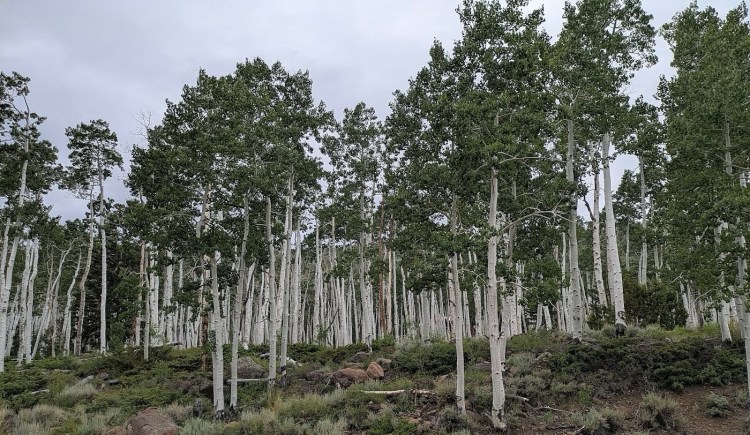
In the 1990s and early 2000s, researchers noticed a troubling pattern: Pando wasn’t producing enough young stems to replace aging ones. Aspen clones are supposed to regenerate continuously, yet large portions of the grove showed almost no saplings. The cause wasn’t disease or age—it was pressure from deer and elk populations that had grown unusually large due to predator loss and human land management.
When sections of Pando were fenced as an experiment, the results were immediate and striking. Inside the fences, young aspens shot up rapidly, some growing several feet in a single season. Outside the fences, regeneration remained nearly nonexistent. The contrast became a living demonstration of how subtle human decisions—fire suppression, predator control, land use—can quietly reshape ecosystems over decades.
Visiting Today
Visitors can explore Pando along a scenic byway near Fish Lake in central Utah. Walking among the slender white trunks and trembling leaves, it feels like entering a living cathedral—quiet, luminous, and expansive. Interpretive signs share Pando’s story, and gentle footpaths allow visitors to observe the grove without disturbing fragile young shoots.
Much of Pando is fenced in certain sections to protect new growth from browsing deer and elk. These enclosures help scientists study regeneration efforts, and visitors can see firsthand the difference between protected and unprotected areas. While the grove is open year-round, autumn is especially breathtaking: the entire organism turns a single shade of gold, glowing across the hillside.
 Illinois Tree Farm